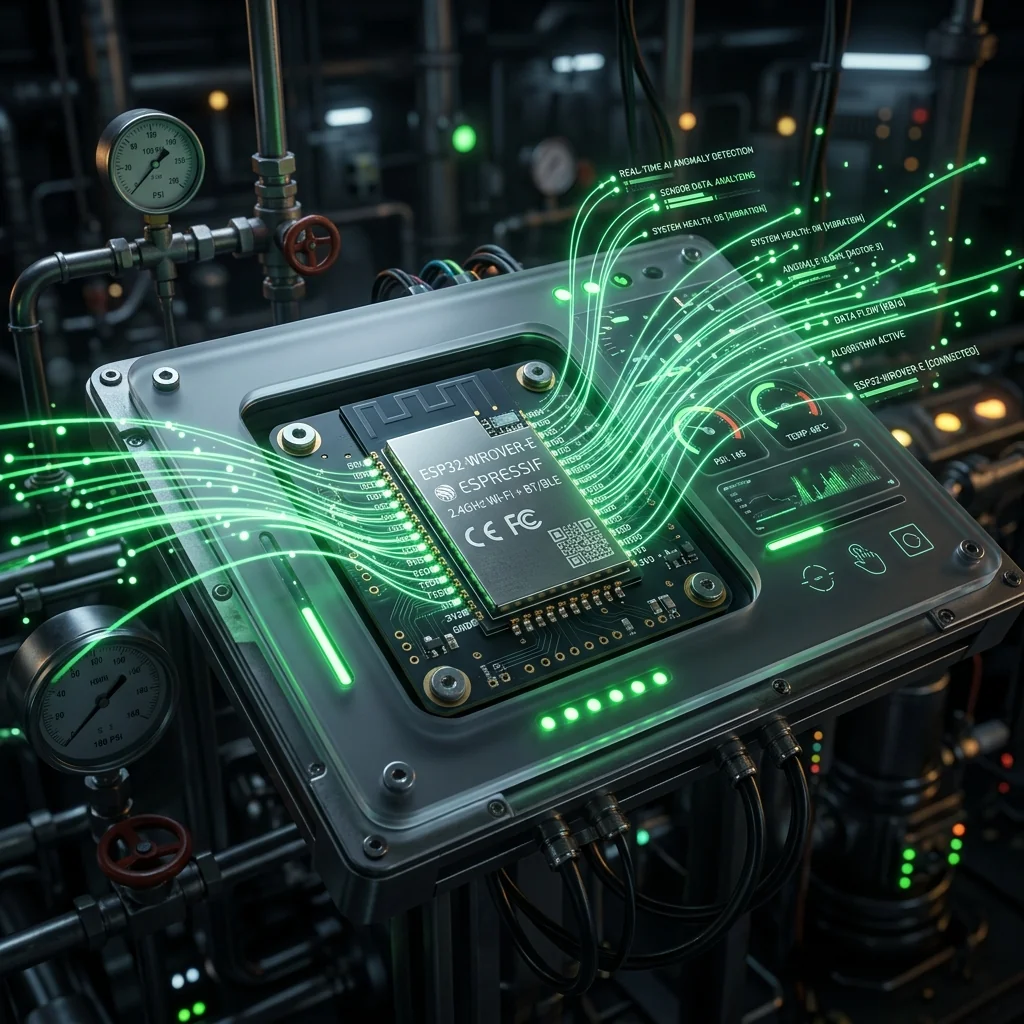
Case Study: Industrial Edge AI Gateway
A deep dive into deploying GRU-based inference engines to the extreme edge: sub-100ms anomaly detection using TFLite Micro and FreeRTOS isolation on dual-core microcontroller hardware, for industrial safety systems such as fire suppression.
Field Notes
IIoT Edge AI Devices: Solar Farm Management
How edge gateways bring inverter, weather, battery, cooling, fire panel, and EV charger data from a solar-plus-storage site onto one secure timeline — plus where control belongs and how the same data supports carbon credits.
IIoT Edge AI Devices: Production Optimization on the SMT Line
How edge gateways bring PLC, reflow oven, sensor, and building data from a surface-mount line onto one secure timeline — and why trend-based maintenance comes before AI.
Traditional Algorithms vs. Edge AI Models: Choosing the Right Approach at the Edge
A practical comparison of rule-based logic and quantized Edge AI models for embedded and IoT systems — pros, cons, and real examples of when each one wins.
Edge AI Principles
- Latency is a safety property: When a decision protects people or equipment, it cannot wait for a network. On-device inference keeps reaction time in milliseconds.
- Constraints first: Model size, memory, and power are design inputs from day one — quantization is an architecture decision, not a compression afterthought.
- Rules where rules win: Deterministic logic is auditable and predictable; Edge AI earns its place where patterns are too complex to hand-code.
- Store-and-forward resilience: Edge nodes cache locally and sync when the network returns — the physical system never stops because the cloud did.
Edge AI is one of the two pillars of my work — see how it meets Physical AI in the Digital Twin stack, or browse all projects.